Business
PF Withdrawal Rule: No tax will be levied if money is withdrawn from a PF account in installments..

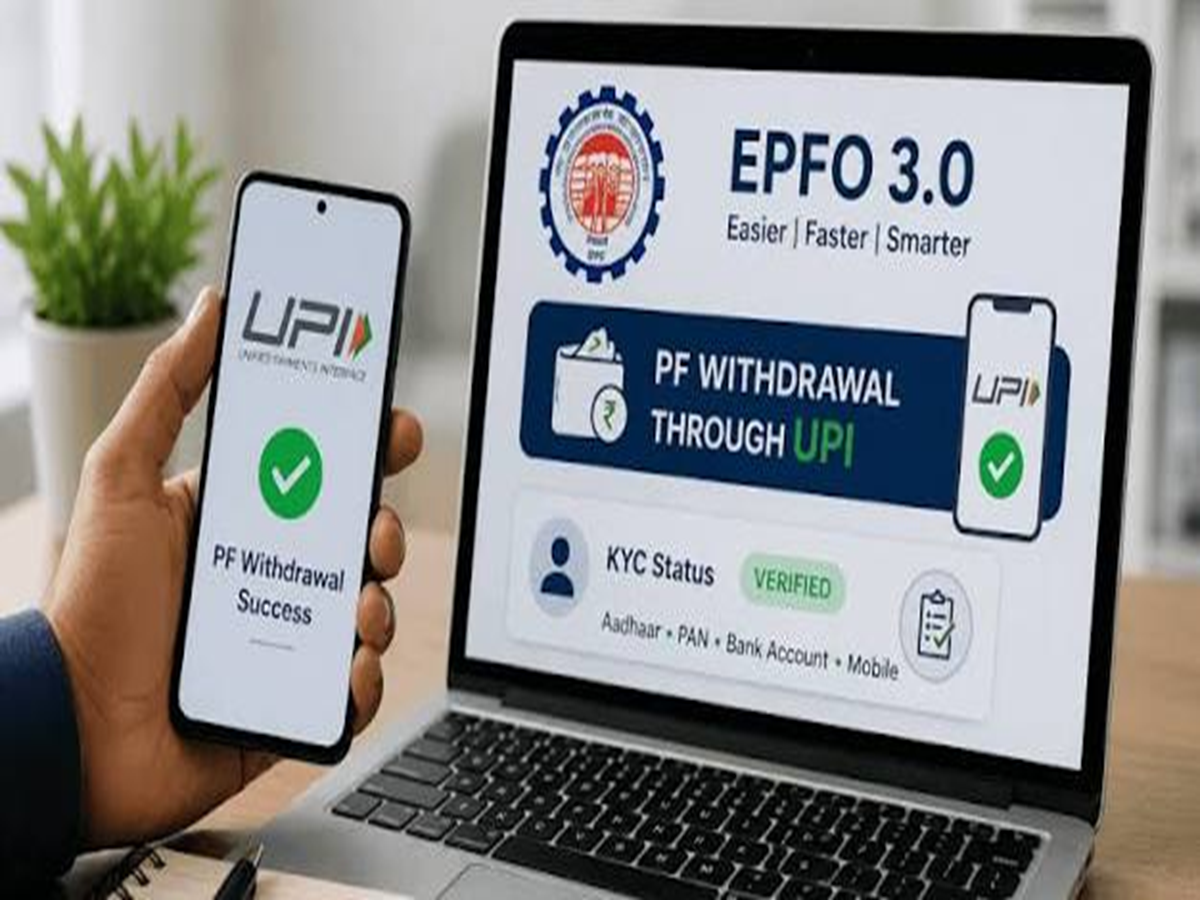
EPFO Chief and Central Provident Fund Commissioner Ramesh Krishnamurthy has stated that there will be no tax on funds withdrawn in installments from an employee's Provident Fund (PF) account post-retirement. Furthermore, the remaining balance will continue to earn the same annual interest rate as that applicable to other PF subscribers—currently 8.25% per annum. This effectively eliminates any tax-related complications regarding withdrawals from PF accounts.
The EPFO Chief noted that implementing the Systematic Withdrawal Plan (SWP) will require amendments to both the provisions governing the Employees' Provident Fund (EPF) and the Income Tax Act. The EPFO has submitted this proposal to the Ministry of Labour and Employment, which is currently in discussions with the Ministry of Finance regarding the necessary changes to the Income Tax Act. It is expected that the proposal will come into effect from April 1, following the passage of the Union Budget.
**Changes to Minimum Balance Requirements**
Last week, the Employees' Provident Fund Organisation (EPFO) approved significant revisions to the rules for withdrawing funds from the Employees' Provident Fund (PF). Under these changes, retiring members will be able to withdraw their accumulated PF corpus in regular installments. Additionally, the mandatory minimum balance to be retained in the account has been reduced from 25% to 10%, and the waiting period required to withdraw the entire corpus has been shortened from 12 months to two months.
**Who Will Benefit?**
Following a decision made during the 240th meeting of the Central Board of Trustees (CBT)—chaired by the Union Minister for Labour and Employment, Mansukh Mandaviya—retiring members will now have the option to receive their accumulated PF funds in monthly, quarterly, or half-yearly installments, rather than as a single lump-sum withdrawal. In the initial phase, this is expected to benefit approximately 6.32 lakh EPF members—all aged over 55—who have more than ₹5 lakh in their Provident Fund accounts. Options for Withdrawing Funds After Retirement
Krishnamurthy explained that when individuals receive their provident fund (PF) corpus as a lump sum upon retirement, they often struggle with decisions regarding how to spend or invest it. Some might invest in mutual funds, open fixed deposits (FDs), or purchase a vehicle—eventually exhausting the funds. Consequently, when future financial challenges arise, they find themselves without resources. With this in mind, the Systematic Withdrawal Plan (SWP) has been introduced. It allows for a regular income stream while keeping the provident fund corpus secure—a sum that remains accessible whenever the need arises. The remaining balance continues to earn interest at the same rate as the PF. In the event of a member's passing, the funds are transferred to their nominee, who may choose to withdraw the entire amount at once or receive it in monthly, quarterly, half-yearly, or annual installments.
Interest Earned on the Remaining Balance
He noted that individuals can withdraw the interest accrued on their PF balance, or even opt to withdraw a smaller amount. Any remaining funds stay in the corpus and continue to earn interest, allowing the total corpus to grow. For instance, consider a PF corpus of ₹10 lakh. At the current interest rate of 8.25%, this would generate an annual interest of ₹82,500—translating to approximately ₹7,000 per month. You could choose to receive this as a monthly payout, while your original corpus remains intact. Alternatively, if you have other sources of income, you might choose to withdraw only ₹5,000 per month. In this scenario, the remaining ₹22,500 (out of the ₹82,500 interest) would be added back to your corpus, leading to higher interest earnings in the following year.
Challenges in Implementing the SWP
Krishnamurthy stated that two legal steps remain: first, the provident fund scheme must be amended; second, there is a proposal to amend the Income Tax Act. We have submitted proposals to amend the Income Tax Act to the Ministry of Labour, which is now taking the matter up with the Ministry of Finance. I expect these changes to come into effect from April 1st, following the Union Budget. Under the current provisions of the Income Tax Act, tax exemption on Provident Fund (PF) contributions requires the existence of an employer-employee relationship—meaning you must be currently employed. Since one is no longer employed after retirement, we have proposed a change: instead of requiring an employer-employee relationship, the tax exemption should apply as long as an individual remains a member of the PF scheme. This would ensure that any amounts received through a Systematic Withdrawal Plan (SWP) remain tax-exempt. Consequently, withdrawing PF funds in installments would not attract any tax.
PC Social Media