LIFESTYLE
Swastika: Why do people draw a Swastika with Bajrangbali's vermilion immediately after buying a new car?
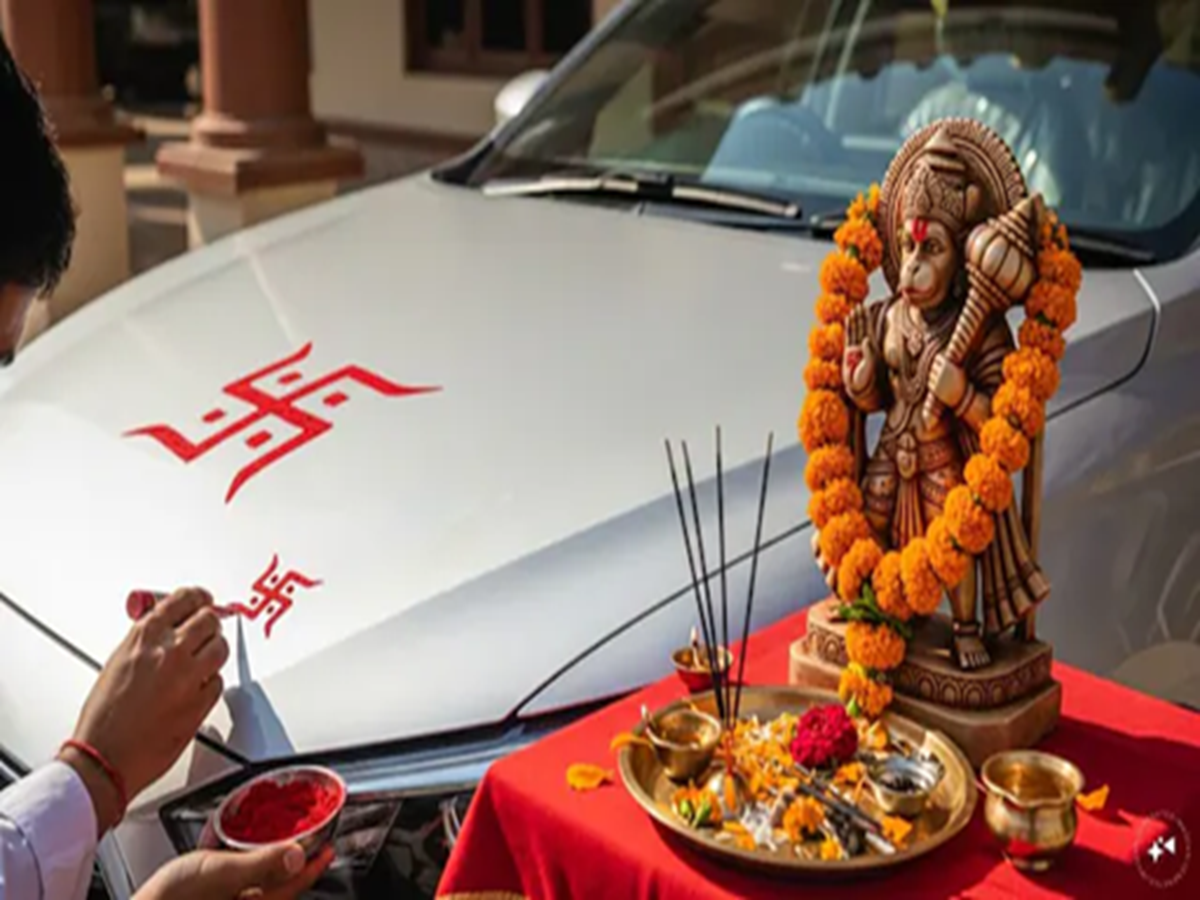
Vehicle Astrology: Bringing a new vehicle home is not merely considered a commercial transaction; rather, in Indian tradition, it is regarded as a symbol of new happiness and fresh beginnings. This is why, even today, the majority of people head directly to a temple after purchasing a vehicle. For some, this is an act of faith; for others, it is a long-standing family tradition. In particular, the custom of bringing *sindoor* (vermilion) from a Hanuman temple to draw a *Swastika* on the new vehicle is a ritual still observed in many households today. It is believed that this ensures the vehicle remains under divine protection and keeps negative energies at bay.
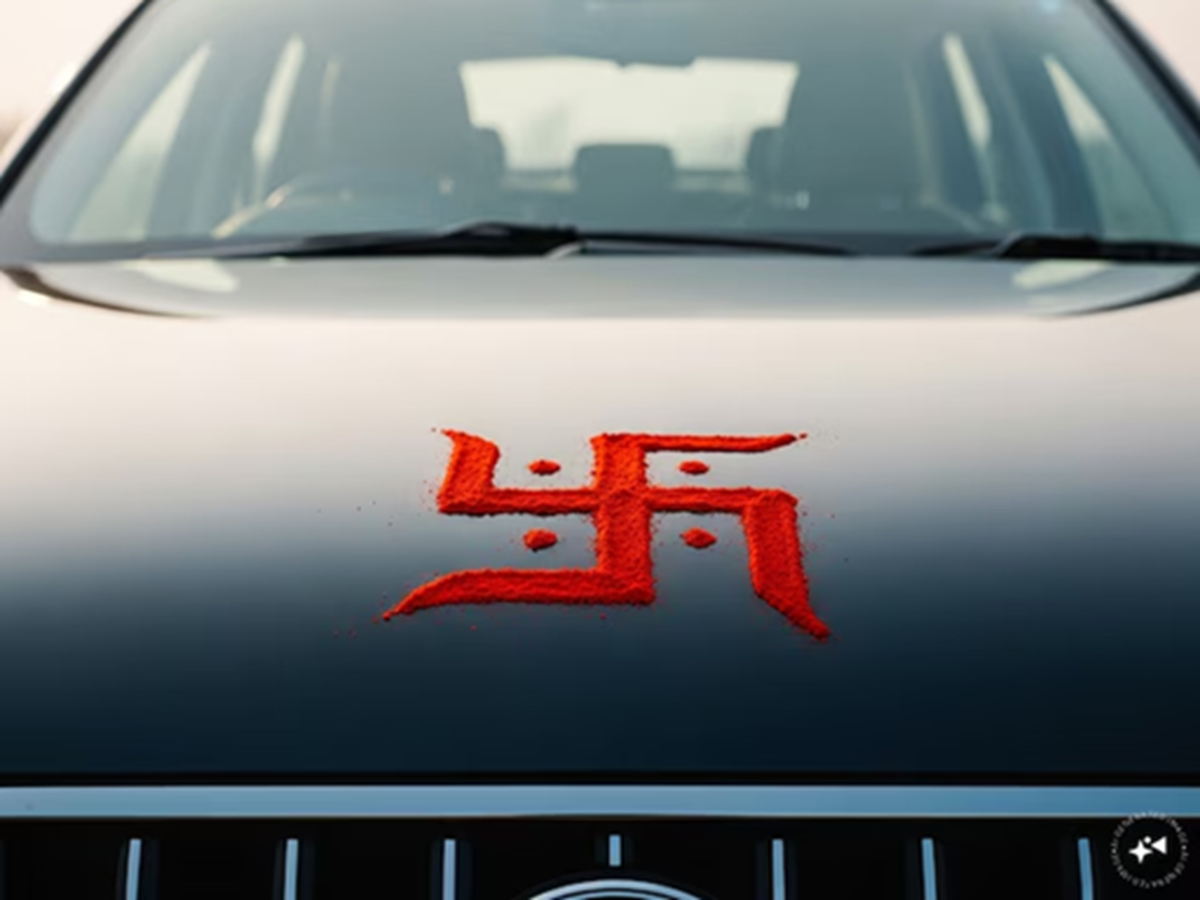
Interestingly, even in this modern era, educated individuals and the youth are seen observing this tradition with the same level of reverence. Astrologer and Vastu consultant Pandit Hitendra Kumar Sharma offers further insights on this subject.
**The Deep Connection Between a New Vehicle and Worship**
In Indian culture, initiating any new endeavor with prayer and worship (*Puja*) is considered auspicious. Whether it is a new home, a shop, or a vehicle, people first invoke the blessings of the Divine. In the science of Astrology, a vehicle is not viewed merely as a means of convenience, but rather as a medium intrinsically linked to an individual's happiness and journeys. For this very reason, after acquiring a new vehicle, people perform rituals such as breaking a coconut, placing lemons, and conducting a formal *Puja*. In many families, an auspicious time (*Shubh Muhurat*) is even consulted before purchasing a vehicle. It is believed that a vehicle purchased during an auspicious time brings enduring happiness and safety.
**The Tradition of Bringing *Sindoor* from a Hanuman Temple**
**Why is Hanumanji's *Sindoor* Considered Special?**
According to religious beliefs, Lord Hanuman is revered as the *Sankatmochak*—the Remover of Obstacles. It is believed that His divine grace wards off fear, accidents, and negative influences. This is precisely why, upon the arrival of a new vehicle, people visit a Hanuman temple to offer prayers and bring back *sindoor* to draw a *Swastika* on the vehicle. While some may view this merely as a customary practice, in many families, it is regarded as a potent symbol of protection and auspiciousness. From villages to metropolitan cities, this tradition remains a widely observed practice to this day.
**The Religious and Astrological Significance of the *Swastika***
In the Hindu faith, the *Swastika* is considered an extremely auspicious symbol. In the realm of Astrology, it is recognized as a symbol of positive energy, well-being, and prosperity. It is widely believed that drawing a Swastika on a vehicle mitigates the influence of negative energies and ensures a safe journey. Many people also have "Shri Ram" or "Jai Bajrangbali" inscribed on the front of their cars. This is regarded not merely as an act of religious faith, but also as an expression of psychological assurance.
Can Worship Alone Avert Troubles?
While religious faith certainly has its place, safety on the road is considered paramount. Elders often say that God helps those who take precautions themselves. Therefore, while driving, it is absolutely essential to adhere to traffic rules, wear a seatbelt, and remain vigilant.
Nowadays, before sharing photos of a new vehicle on social media, people invariably post pictures of the *puja* (worship ceremony) performed for it. This demonstrates just how deeply Indian traditions remain intertwined with people's lives, even amidst the advancements of technology and modernity.
PC Social Media