Business
DA Hike 2026: Central Employees May Get 3%–4% Increase; Check Expected Salary Gain and Arrears
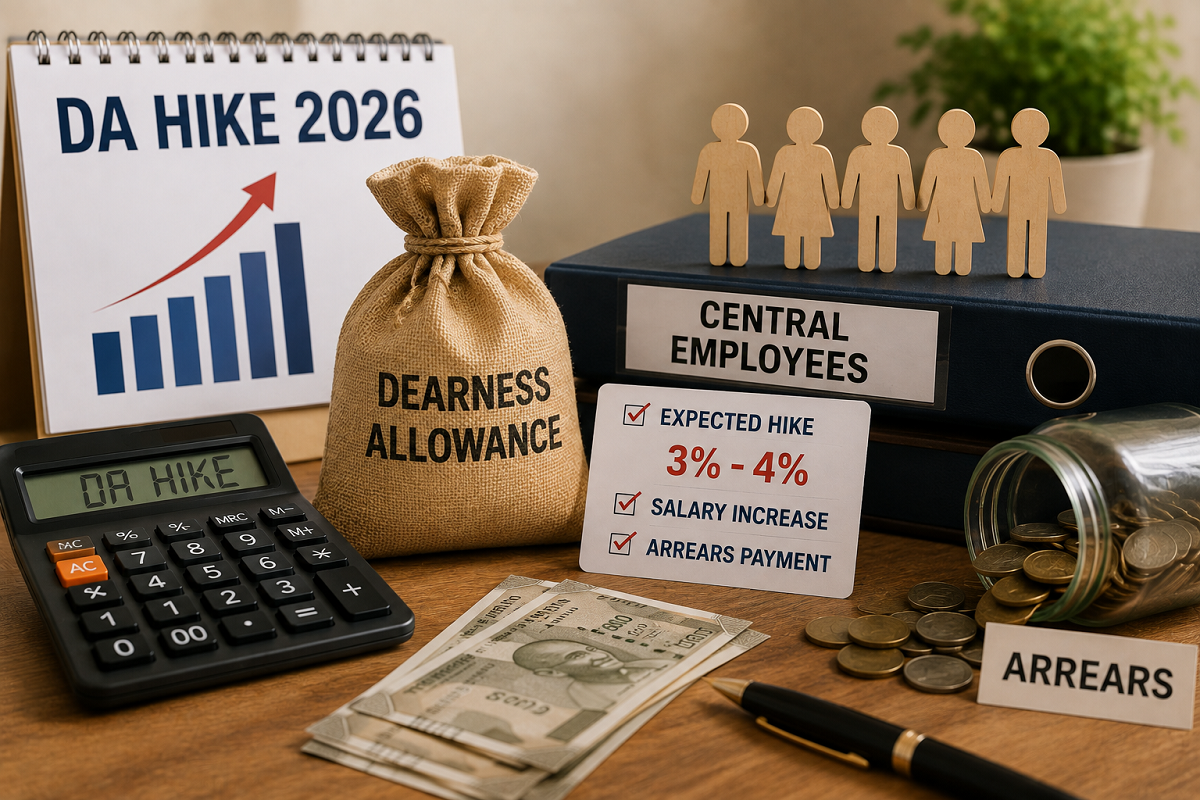
DA Hike Update: Central Government employees and pensioners may receive another increase in Dearness Allowance and Dearness Relief for the July–December 2026 period. The latest AICPI-IW data has strengthened expectations of a possible 3% to 4% hike, which could raise the current DA rate from 60% to either 63% or 64%. The revised benefit is expected to apply retrospectively from July 1, 2026, once the government gives its final approval.
Fresh AICPI-IW Data Raises Expectations of a DA Increase
The latest Consumer Price Index for Industrial Workers has brought encouraging news for Central Government staff and pensioners.
According to the June 2026 data, the All-India Consumer Price Index for Industrial Workers increased by 1.1 points to 151.9. This index is used to calculate changes in Dearness Allowance for employees and Dearness Relief for pensioners covered under the 7th Central Pay Commission.
Based on the average index figures for the 12-month period from July 2025 to June 2026, calculations indicate that the applicable DA rate could reach approximately 63.77%.
Central Government employees currently receive DA at the rate of 60% of basic pay. Therefore, the final increase could be either 3 percentage points or 4 percentage points, depending on how the government handles the decimal figure.
How Is Dearness Allowance Calculated?
The government considers the 12-month average of AICPI-IW data before revising the DA rate.
For the July 2026 revision, the average index between July 2025 and June 2026 is estimated at 148.65.
Under the formula prescribed for the 7th Pay Commission, the calculation is made as follows:
DA Formula:
[{(Average AICPI-IW × 2.88) – 261.41} ÷ 261.41] × 100
Using the average index of 148.65:
[{(148.65 × 2.88) – 261.41} ÷ 261.41] × 100 = 63.77%
This figure is higher than the present DA rate of 60%, indicating a likely increase in the upcoming revision.
Will the DA Increase Be 3% or 4%?
The final decision may depend on the government’s rounding policy.
Possibility of a 3% Increase
If the government ignores the decimal portion and considers only the lower whole number, the DA rate may be fixed at 63%.
In that case, employees would receive a 3-percentage-point increase, taking DA from 60% to 63%.
Representatives of employee organizations have indicated that a 3% increase appears to be the more likely outcome based on previous calculation practices.
Possibility of a 4% Increase
If the government rounds 63.77% to the nearest whole number, the DA rate may be fixed at 64%.
This would result in a 4-percentage-point increase for employees and pensioners.
However, the final percentage will be known only after the Union Cabinet approves the proposal and an official notification is issued.
Employee Unions Seek Full Benefit
Employee organizations have reportedly demanded that the government should not simply remove the decimal figure while determining the DA rate.
Some unions have suggested that the full calculated rate of 63.77% should be considered. Others have renewed their demand for the accumulated DA to be merged with basic pay.
However, no official decision has been announced on either proposal.
How Much Could Salaries Increase?
The impact of the DA revision will depend on an employee’s basic salary.
For a Level-1 Central Government employee earning the minimum basic pay of ₹18,000, the expected monthly benefit can be calculated as follows:
If DA Rises by 3%
A 3% increase on ₹18,000 basic pay would result in:
₹18,000 × 3% = ₹540 per month
The employee’s monthly DA component would therefore rise by ₹540.
If DA Rises by 4%
A 4% increase on ₹18,000 basic pay would provide:
₹18,000 × 4% = ₹720 per month
Employees with higher basic pay would receive a proportionately larger increase.
For example, an employee with a basic salary of ₹50,000 could gain:
- ₹1,500 per month with a 3% hike
- ₹2,000 per month with a 4% hike
The increase may also influence certain allowances and retirement-related benefits that are linked to basic pay or DA, subject to applicable service rules.
Pensioners May Receive Higher DR
The revision is not limited to serving employees. Central Government pensioners are also expected to receive a corresponding increase in Dearness Relief.
If the government approves a 3% or 4% rise, pensioners will receive the same percentage-point increase on their eligible pension amount.
This adjustment is intended to protect pensioners against the impact of rising living costs.
When Could the Government Announce the DA Hike?
The government generally announces the DA revision for the second half of the year around September or October, often close to the festive season.
Although the announcement may come later, the revised rate is expected to be effective from July 1, 2026.
This means employees and pensioners could also receive arrears for the period between July and the month in which the revised payment is implemented.
For example, if the announcement is made in October, eligible beneficiaries may receive arrears for July, August, and September along with the revised salary or pension.
What Employees Should Keep in Mind
The current calculations are based on the latest AICPI-IW figures and the established DA formula. However, the final increase has not yet been officially approved.
Until the government issues a formal notification, the expected 3% or 4% increase should be treated as an estimate rather than a confirmed benefit.
Final Takeaway
The latest inflation index data has raised hopes of a fresh DA hike for Central Government employees and pensioners. Based on the calculated rate of approximately 63.77%, the government may increase DA and DR from the current 60% to either 63% or 64%.
For an employee with a basic salary of ₹18,000, the monthly benefit could range from ₹540 to ₹720, while those with higher salaries would receive a larger increase. The revision is expected to take effect from July 1, 2026, with arrears likely to be paid after the official announcement.
Employees and pensioners should wait for the Union Cabinet’s approval and the government notification before treating the proposed increase as final.