
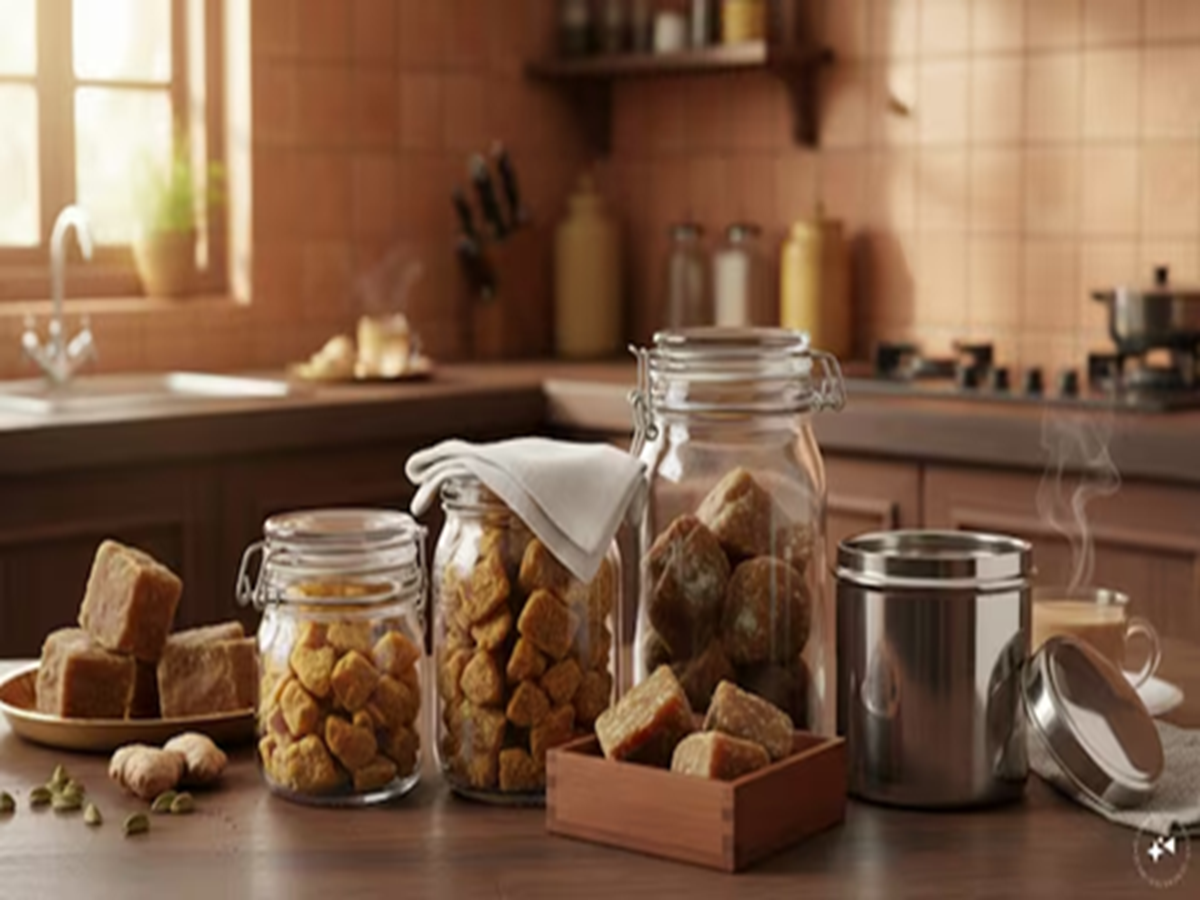
Jaggery holds a special place in Indian kitchens. Beyond adding sweetness, it is considered a rich source of various nutrients. It is used in tea, *laddus*, *kheer*, chutneys, and numerous traditional dishes. However, preserving jaggery becomes a challenge during the rainy season. Due to increased humidity in the air, jaggery tends to soften, melt, and sometimes even develop mold. Therefore, proper storage is essential to keep it fresh and usable for a long time.
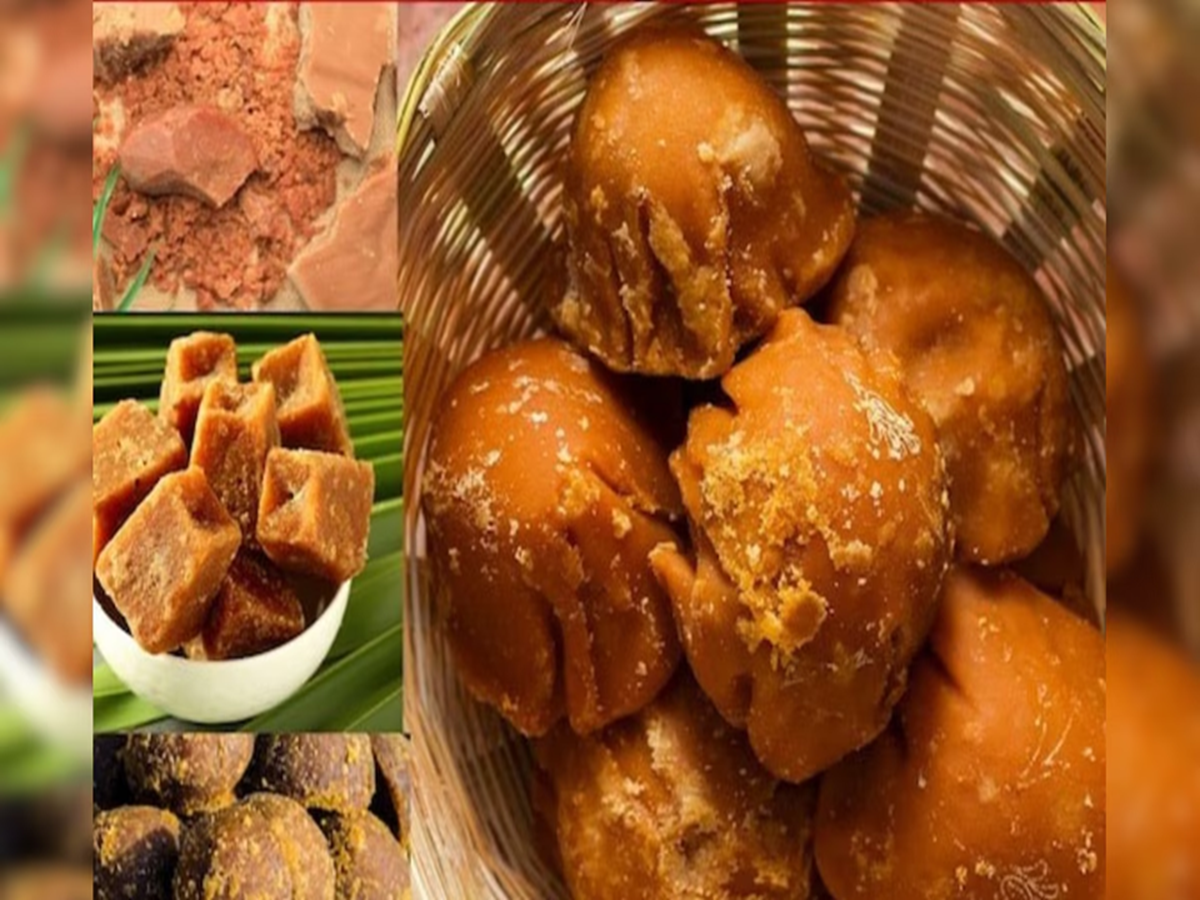
Why does jaggery melt?
Jaggery has a natural ability to absorb moisture. During the monsoon, atmospheric humidity levels rise, and jaggery rapidly absorbs this moisture. This causes it to become sticky, soft, and sometimes even release liquid. If not stored correctly, both its taste and quality can be compromised.
Easy ways to preserve jaggery
1. Store in an airtight container
Always store jaggery in an airtight container made of glass, steel, or food-grade plastic. This prevents external moisture from entering, keeping the jaggery safe for a longer period.
2. Choose a cool, dry place
Store jaggery in a spot away from direct sunlight and areas with high humidity. Avoid keeping it near the gas stove or sink, as these areas are prone to both heat and moisture.
3. Store in small pieces
Instead of storing a large block of jaggery, cut it into smaller pieces. This makes it easier to take out the required amount without needing to open the container repeatedly.
4. Use moisture-absorbing materials
Some people place a clean cotton cloth or a food-safe moisture-absorbing packet inside the jaggery container. This helps control excess moisture. Ensure that these materials do not come into direct contact with the jaggery itself.
5. Option to store in the refrigerator
If there is high humidity in your area, jaggery can also be stored in the refrigerator in airtight packaging. However, let it sit at room temperature for a while before use so that its texture returns to normal.
How to identify spoiled jaggery?
If white or green mold appears on the jaggery, if it develops an odd odor, or if its taste changes, it should not be consumed. It is best to discard such jaggery immediately.
Benefits of consuming jaggery
Jaggery contains iron, calcium, potassium, and various micronutrients. Consuming it in moderation can aid digestion and provide energy to the body; traditionally, it is also considered beneficial for colds and coughs. However, since it is a form of sweetener, individuals suffering from diabetes or other health issues should consume it only upon a doctor's advice.
PC Social Media