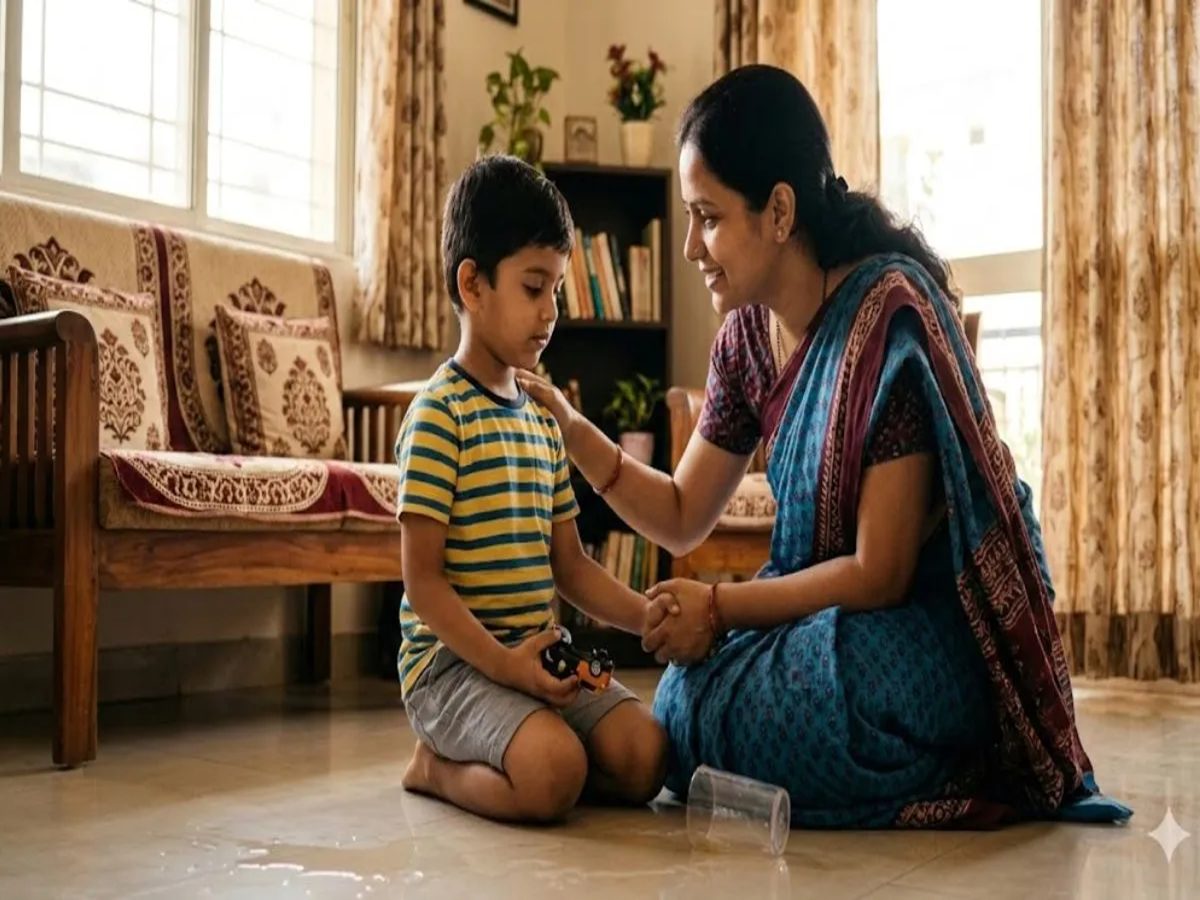

Parenting Mistakes: Every parent loves their children and wants to raise them well. However, amidst the daily grind, exhaustion, and irritability, we sometimes say things that leave a deep impact on a child’s mind. In the context of child-rearing, it is crucial to understand how a parent’s tone of voice shapes a child’s self-confidence and emotional security.

Social media often highlights the stark differences in communication between toxic behavior and healthy parenting. While a harsh remark does not always stem from ego—it may sometimes be the result of fatigue or ingrained habits—it inevitably affects the child. Let’s look at three common scenarios where changing the way we communicate can help improve the relationship.
Admitting a mistake—
When a child expresses that something we said hurt them, we sometimes deflect by saying, "Fine, sorry... I guess I’m just the worst parent ever." This causes the child to set aside their own hurt feelings and instead feel guilty themselves, which often leads them to suppress their emotions in the future.
Instead, it is far more effective and constructive to simply acknowledge that you are sorry your words caused them pain. This makes the child feel that their feelings are valued and respected.
Holding basic needs over a child’s head—
During arguments or moments of anger, parents might sometimes taunt their children, reminding them that they are being provided with a home, shelter, or other amenities—implying that the child should be "grateful" (as if it were a favor). When parenting is framed as a debt or a favor, it creates distance and guilt in the child.
In healthy parenting, it is understood that caring for a child is an act of love and responsibility, not a favor. A child should always feel that they are loved unconditionally.
The Approach to Seeking Respect—
It is often assumed that, simply by virtue of being older, one is entitled to respect—regardless of how one chooses to communicate. However, respect extracted through pressure or fear tends to create distance, whereas mutual understanding fosters a deeper sense of connection. A better approach is for parents to show respect for their child’s thoughts and opinions; this, in turn, encourages the child to offer respect from the heart.
What to Do When You Feel Angry?
We all know what is right, yet it can be difficult to restrain ourselves when anger takes hold. In such moments, pause for a few seconds or take a deep breath before saying anything harsh. Even a simple remark, delivered calmly, helps a child feel secure and strengthens the relationship.
PC Social Media