
LIFESTYLE
WhatsApp May Introduce ‘After Reading’ Privacy Feature That Deletes Messages After They’re Seen
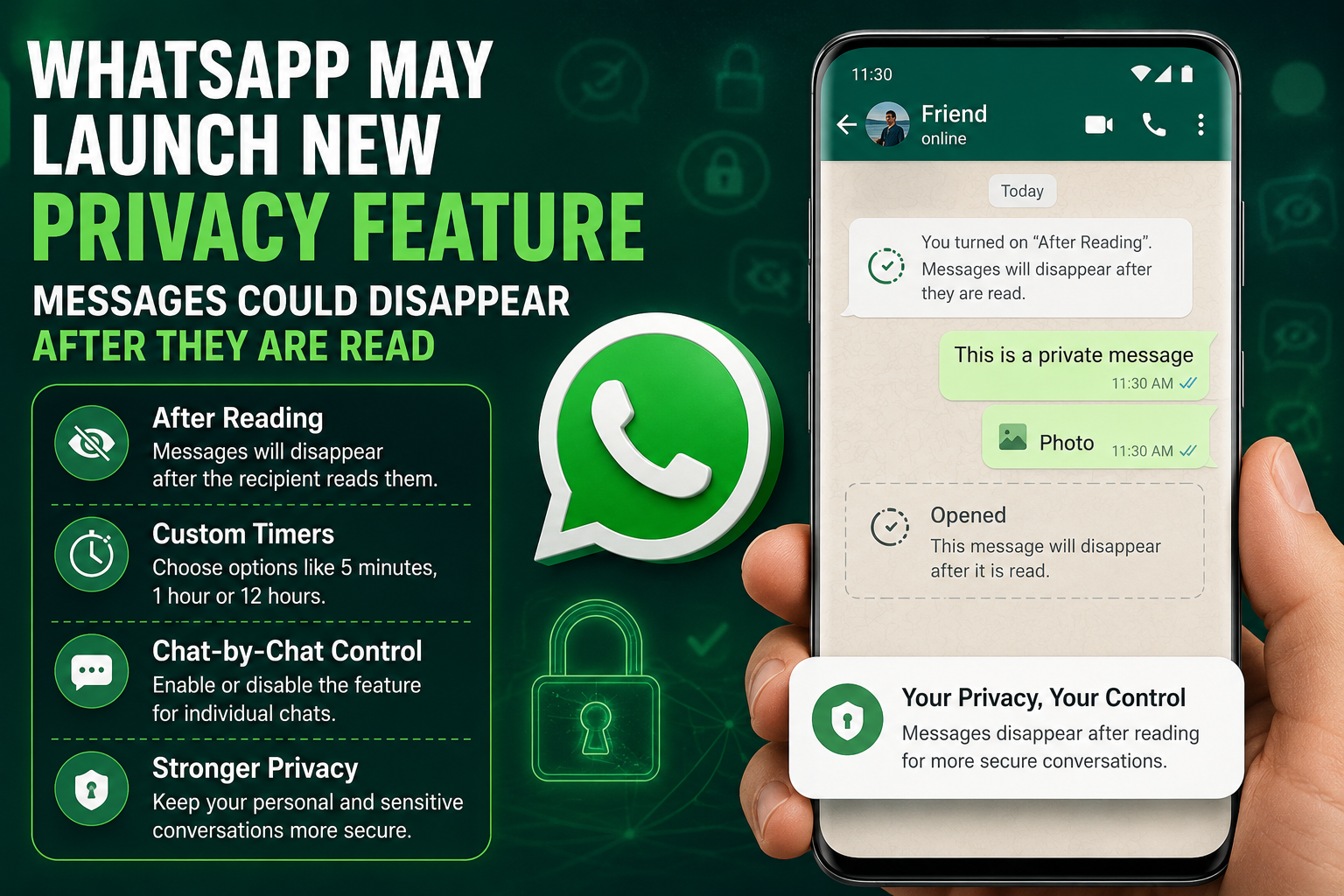
WhatsApp is reportedly working on a new privacy-focused feature that could significantly change the way users manage sensitive conversations. According to recent reports, the messaging platform is testing a new “After Reading” option that may automatically delete messages shortly after they are viewed by the recipient.
The feature is being seen as a more advanced version of WhatsApp’s existing disappearing messages system and could offer users greater control over personal chats, confidential conversations, and temporary information sharing.
What Is WhatsApp’s ‘After Reading’ Feature?
Currently, WhatsApp allows users to enable disappearing messages with timers such as 24 hours, 7 days, or 90 days. Once the selected duration ends, messages automatically disappear from the chat.
However, the new “After Reading” feature is expected to work differently. Instead of deleting messages based purely on time, the new system may begin the deletion process only after the recipient reads the message.
This means the message could remain visible until it is opened, ensuring that important communication is not deleted before the receiver actually sees it.
How the Feature May Work
Reports suggest that users may be able to set different deletion timers for sent messages. For example, if a sender selects a five-minute timer, the countdown may begin only after the recipient opens and reads the message.
On the sender’s device, the message could disappear after the chosen time limit, while on the recipient’s device, the timer would activate once the message is viewed.
This system could help balance convenience and privacy by ensuring messages are delivered and read before they vanish permanently.
Multiple Timer Options May Be Available
Leaks and reports indicate that WhatsApp could provide several timing choices under the “After Reading” feature.
Possible options may include:
- 5 minutes
- 1 hour
- 12 hours
Users would then be able to choose how long messages should remain visible after they are opened.
This added flexibility may make the feature useful for office communication, confidential discussions, verification details, and personal conversations.
What Happens If the Message Is Never Read?
One interesting detail emerging from reports is that unread messages may not remain in chats forever.
Sources suggest that if the recipient does not open the message, WhatsApp could still automatically delete it after 24 hours. This may prevent chats from storing unnecessary or sensitive data for long periods.
Such a system could strengthen privacy protections while also reducing digital clutter inside conversations.
Feature May Work Separately for Each Chat
Reports indicate that the “After Reading” option may not be enabled globally across all chats at once.
Instead, users could activate or disable it individually for specific conversations. This chat-by-chat control would allow people to use the feature only where needed, while keeping regular chats unchanged.
For example:
- Private conversations could use disappearing messages
- Office chats could remain permanent
- Sensitive information could auto-delete after viewing
This flexibility may become one of the feature’s strongest advantages.
Why Privacy Features Are Becoming More Important
As digital communication becomes increasingly central to personal and professional life, concerns around privacy, screenshots, data leaks, and chat security continue to grow.
Users today often prefer conversations that leave minimal digital traces, especially while sharing:
- Personal information
- Financial details
- Temporary passwords
- Confidential work discussions
- Sensitive images or documents
The new “After Reading” feature appears designed to address exactly these concerns.
Still Under Testing Phase
At present, WhatsApp has not officially announced a public release date for the feature. Reports suggest it is currently being tested in beta versions of the app.
Like many experimental WhatsApp features, the final version may change before global rollout. Some features tested in beta programs also never reach public release.
Still, the development highlights Meta’s growing focus on privacy-centered messaging tools for users worldwide.
WhatsApp Continues Expanding Security Features
Over the past few years, WhatsApp has introduced several privacy and security updates, including:
- End-to-end encryption
- Chat lock
- Disappearing messages
- Screenshot restrictions for view-once media
- Multi-device support with security controls
The upcoming “After Reading” feature could become another major addition aimed at improving private communication on the platform.