Business
When Should You Change Your NPS Fund Manager? Check These 5 Factors Before Making a Decision
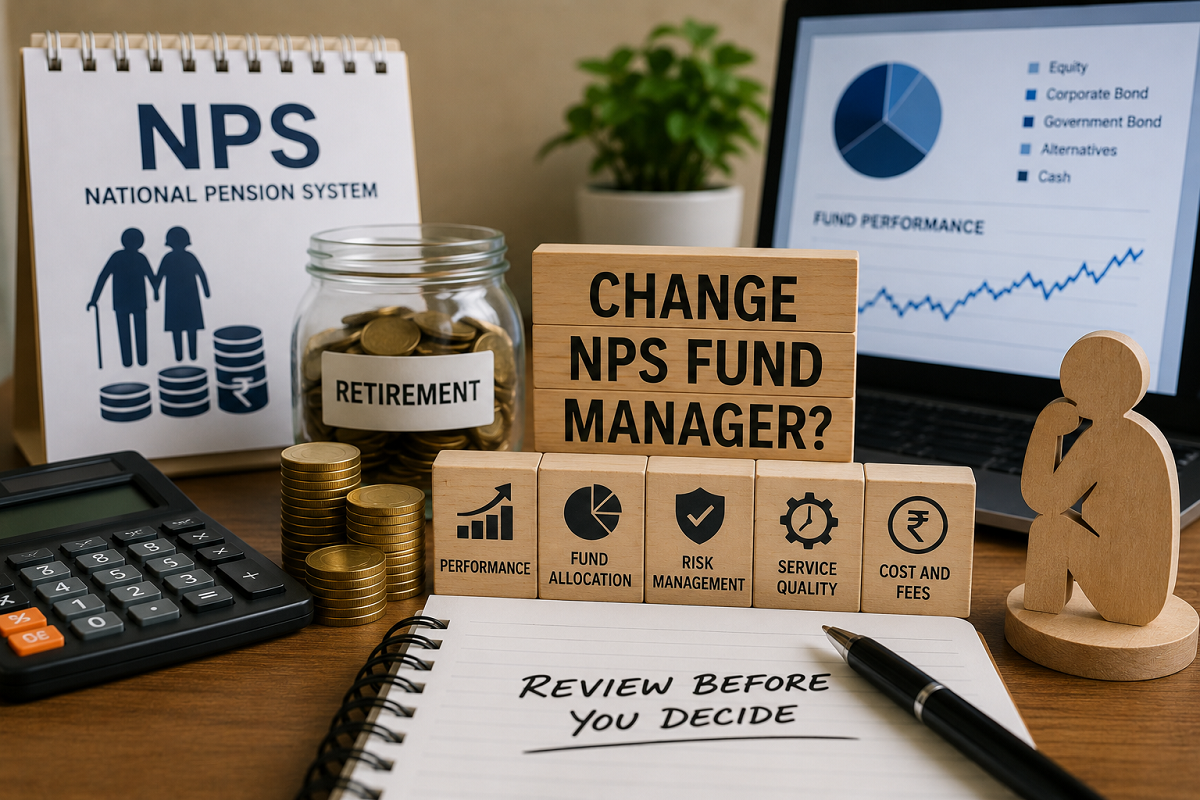
NPS Investment Guide: Choosing the right pension fund manager can have a major impact on the growth of your retirement savings under the National Pension System. However, changing a fund manager based on a few months of weak returns may not be a wise move. Since NPS is designed as a long-term retirement product, investors should evaluate performance, risk, consistency, and asset allocation carefully before switching.
Why the NPS Fund Manager Matters
When you invest in the National Pension System, your contributions are managed by a registered pension fund manager. Depending on the investment option selected, the money may be allocated across equities, corporate bonds, government securities, and other permitted assets.
The fund manager’s investment decisions influence how the retirement corpus grows over time. NPS subscribers are allowed to change their pension fund manager, but experts recommend using this flexibility only after a detailed review.
A temporary period of underperformance is not always a sign that the fund manager is unsuitable. Markets move in cycles, and even a well-managed portfolio may deliver lower returns during certain phases.
1. Review Long-Term Performance Before Switching
Experts generally recommend considering a change only when a fund manager has consistently underperformed its benchmark and comparable funds for around three to five years.
For example, assume one pension fund has generated an average annual return of 11% over four years, while another has delivered only 8% during the same period. If both funds have similar asset allocations and risk levels, the difference may justify a closer review.
However, changing a manager because of weak returns in just one year could be a mistake. Short-term performance may be influenced by market volatility, interest-rate movements, sector cycles, or temporary portfolio adjustments.
Investors should therefore compare returns over multiple periods instead of relying only on the latest annual figure.
2. Avoid Chasing the Best-Performing Fund Every Year
The highest-returning fund in one year may not remain at the top in the following year. Equity and debt markets do not move in a straight line, and leadership frequently changes between funds.
If investors repeatedly move their NPS corpus to whichever fund performed best in the previous year, they may enter after most of the gains have already occurred. By the time the switch is completed, another fund may begin outperforming.
Frequent switching can also disturb long-term investment discipline and reduce the benefits of compounding. NPS is generally held for several decades, so consistency and patience are usually more important than short-term rankings.
3. Do Not Judge a Fund Only by Returns
Returns are important, but they should not be the only factor used to evaluate a pension fund manager.
Investors should also examine:
- The amount of risk taken to generate returns
- The fund’s performance during market declines
- Portfolio quality and diversification
- Consistency across market cycles
- The manager’s investment discipline
- Performance against the relevant benchmark
A fund that generates 12% returns with very high volatility may not necessarily be better than one that delivers 11% with lower risk and more stable performance.
For retirement planning, the ability to protect capital during difficult market conditions can be just as important as earning high returns during a rally.
4. Pension Fund Managers Available Under NPS
NPS subscribers can choose from several registered pension fund managers. The available names include:
- SBI Pension Funds
- LIC Pension Fund
- UTI Pension Fund
- HDFC Pension Fund Management
- ICICI Pension Fund Management
- Kotak Mahindra Pension Fund
- Aditya Birla Sun Life Pension Fund Management
- Tata Pension Fund Management
- Axis Pension Fund Management
- DSP Pension Fund Managers
Before selecting or changing a fund manager, subscribers should compare performance within the same asset class. Equity returns should not be directly compared with government bond or corporate debt returns because their risk profiles and investment objectives are different.
5. Understand Active Choice and Auto Choice
NPS provides two main asset-allocation options: Active Choice and Auto Choice.
Active Choice
Under Active Choice, the subscriber decides how much money should be allocated to equities, corporate debt, government securities, and other eligible asset classes.
Investors using this option should regularly review both their asset allocation and the performance of the chosen fund manager. The portfolio may also need rebalancing as retirement approaches or financial goals change.
Auto Choice
Under Auto Choice, the asset allocation changes automatically according to the subscriber’s age and selected lifecycle fund. Equity exposure generally reduces as the investor grows older, while allocation to relatively stable debt instruments increases.
Subscribers using Auto Choice do not need to actively manage asset allocation. However, they should still monitor whether the selected pension fund manager has delivered consistent long-term results.
Common Mistakes NPS Investors Should Avoid
Investors should avoid making decisions based on short-term market movements or isolated performance figures.
Common mistakes include:
- Selecting a fund only because it delivered the highest return last year
- Changing pension fund managers too frequently
- Comparing equity funds directly with debt funds
- Ignoring risk while focusing only on returns
- Switching funds immediately after a market decline
- Failing to review asset allocation as retirement approaches
NPS is usually a 20- to 30-year investment journey. Decisions should therefore be based on long-term performance, risk management, and consistency rather than short-term fluctuations.
How to Open an NPS Account
Any eligible Indian citizen aged 18 years or above can open an NPS account, subject to applicable rules. Salaried individuals, self-employed professionals, business owners, and eligible non-resident Indians can participate in the scheme.
An NPS account can be opened through:
- A bank registered as a Point of Presence
- An authorized post office
- The official eNPS platform
- Other approved financial intermediaries
After registration, the subscriber receives a Permanent Retirement Account Number, commonly known as PRAN. This unique number is used to make contributions, track investments, update preferences, and manage the retirement account.
Final Takeaway
Changing an NPS fund manager should not be an emotional or hurried decision. Investors should consider a switch only when the manager has shown sustained underperformance over several years compared with its benchmark and similar funds.
Long-term consistency, portfolio quality, downside protection, and risk-adjusted returns should all be considered before making a change. Frequent switching may weaken investment discipline and prevent investors from benefiting fully from compounding.
The most effective NPS strategy is to remain patient, review the portfolio periodically, and make changes only when supported by clear long-term evidence.
Disclaimer: This article is intended only for general informational purposes. NPS returns are market-linked and are not guaranteed. Investors should assess their financial goals, risk profile, and retirement needs or consult a qualified financial adviser before making investment decisions.